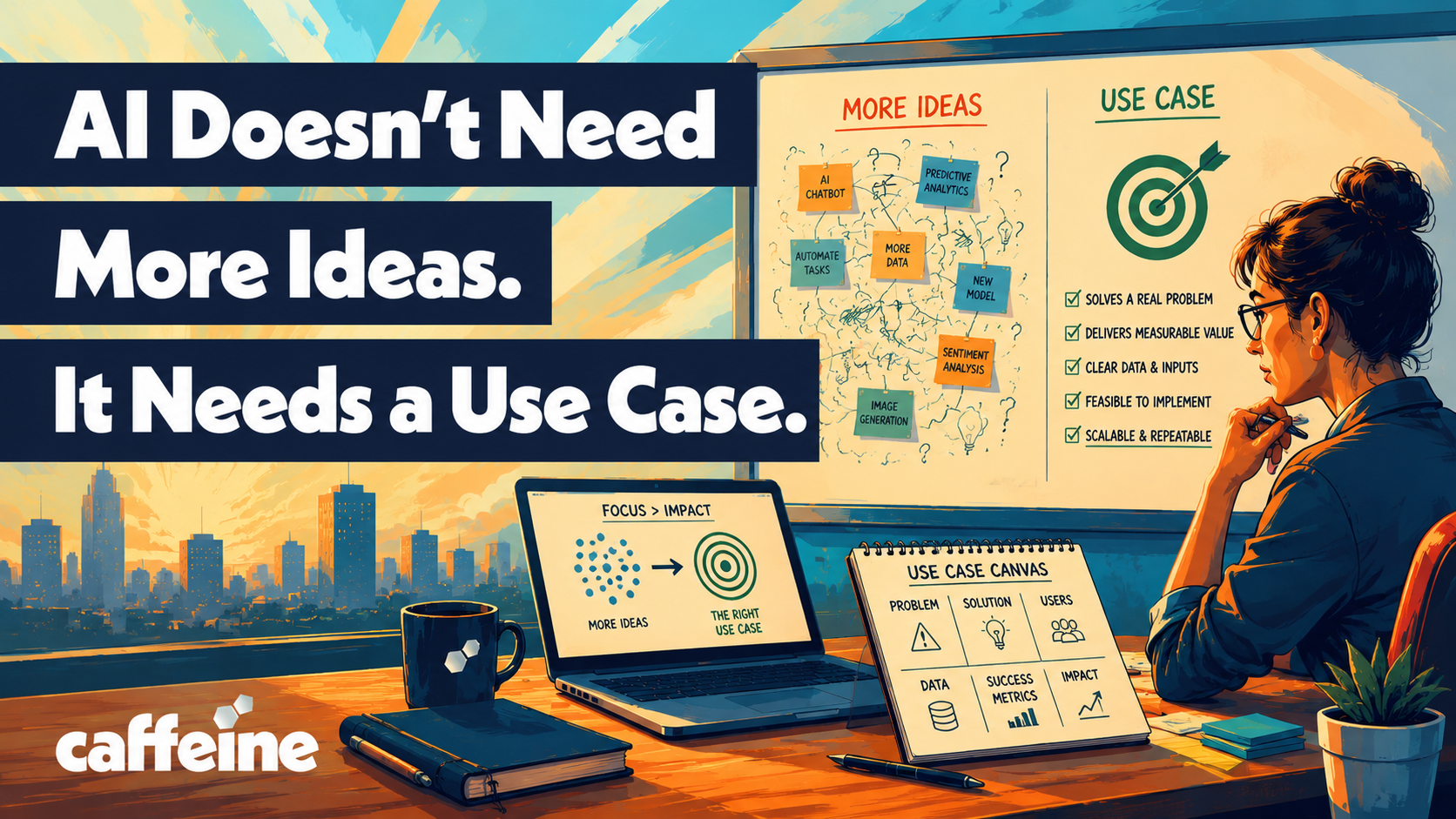
The Cost of Waiting for the Future
It’s hard to ignore the noise around AI right now.
You hear about it at conferences, from vendors, and in trade publications. The conversation is constant, but it happens at a level that rarely translates to daily operations. It’s framed as a “massive shift that will transform the industry,” but nobody sits down and explains exactly what problem it solves in your dispatch office or service bay today.
Because the conversation feels disconnected from reality, it’s easy to treat AI as a technology trend that might be relevant someday. The most common response is simply to wait it out.
When Exploration Becomes a Distraction
Some operators do take the next step. They set up accounts, test a few prompts, and encourage their teams to experiment.
But without a clear definition of what they want to improve, that experimentation rarely leads to forward progress. They end up with a collection of tools that nobody uses consistently and a vague sense that the technology didn’t deliver what was promised.
Initial enthusiasm fades. The team defaults back to what they were doing before because the new tools don’t have a clear win attached to them.
Exploration without intention is a cost center. It consumes time and energy without any sense of what return should be expected.
The Mistake of Starting With the Tool
The operators who actually benefit from AI take a different approach. They don’t start with technology. They start with the problem.
They sit down with their teams and identify the friction in their business. They look for where people spend the most time on repetitive, low-judgment tasks. They find the places where mistakes or delays most often occur.
Only after they map the friction do they ask whether AI could reduce it.
That sequence changes the entire decision framework. Instead of trying to find a use for a new tool, they are solving a defined operational problem.
Why the Math Matters First
Before any implementation begins, the potential impact has to be quantified.
The simplest way to evaluate an opportunity is to look at time. How many hours per week are spent on a specific task? What is the fully loaded cost of the people doing it? If a new process can handle that task in a fraction of the time with acceptable quality, that is a baseline case for moving forward.
When you quantify the potential, you are answering three questions: How much does this problem currently cost the business? What is a realistic estimate of what could be recovered? Is that return worth the investment of implementation and training?
Without those numbers, decisions are based on trends rather than business fundamentals.
The Risk of Unfocused Adoption
When implementation isn’t tied to a specific outcome, the risk goes beyond wasted time. The deeper risk is organizational cynicism.
If a team experiments and can’t point to a tangible result, the message that spreads is that the technology simply doesn’t work. That perception is hard to reverse, and it closes the door on future initiatives that might actually carry significant value.
AI adoption that isn’t tied to outcomes is just a distraction wearing the costume of progress.
Proving Value in One Place
The goal isn’t to model a complex, multi-year transformation before taking action. The goal is to start simple.
Find one area of friction. Define what success looks like. Prove the value in that one place, and let those results build the case for the next initiative.
Curious what it looks like to map the friction in your operations and build a measurable case for AI? Contact us here.